
Sidestepping the fact that many of the IDW’s members have appeared on cable TV (as pundits no less), Rubin’s take aligns closely with Weinstein’s. He notes that an IDW member’s analysis on current events will often run counter to mainstream media’s take, particularly left-leaning outlets. There are entire cities to sack in the bad arguments and sometimes downright embarrassing claims made by the IDW’s would-be militants for reason and, in this respect, Brooks certainly doesn’t hold back his contempt. Dave Rubin in particular (“mind-blowingly insipid,” “dumb as a rock”) provides ample fodder. As Michael Brooks observes in the opening chapter of his new book Against the Web, the contradiction is hardly a new one. Reactionary figures, after all, have projected a narrative of cultural victimhood going back to the earliest days of William F. Buckley Jr and the National Review.
The Western Pursuit Of Truth
“I was told that there had been complaints; however, despite asking, I was never told who complained nor the nature of the complaints,” continued Roberts. “The book was then investigated and it was determined that it could not return to sales in its current form.” I found a downloadable PDF copy of the book while searching for something else. Then I wanted to buy a Kindle edition, but the Kindle edition never came out. I found this surprising but now, after a conversation with the author, I know what happened.
November Social Security Direct Payment Worth $967 Goes Out In 29 Days
The science game shouldn’t disallow your findings just because you happen to be a certain race or gender—just as it shouldn’t afford you special privileges due to those distinctions. What matters is the principle, the idea itself, which is filtered through a community of meticulous checkers trying to disprove hypotheses using the Scientific Method. First of all, the world is an offensive place naturally, and secondly, most anything can be construed as offensive. Offense is subjective by nature and largely determined by individual temperament.
The IDW Never Had A Viable Theory Of Change
For instance, US President Joe Biden was urged to pick a Black woman as vice president and promised to nominate a Black woman to the Supreme Court – both of which he did. He has been criticised for making these choices based on identity rather than merit. These kinds of discussions had, for decades, been routinely shut down in universities. For example, last year, students called for the cancelling of “gender-critical feminist” Holly Lawford-Smith’s course on feminism at the University of Melbourne, due to her arguments for the significance of biological sex. However, there were 50 or more others like Musk and Gabbard who appeared on Rogan’s podcast (and those of other core figures), who had similar values and concerns. In the week before the election, podcast episodes with Trump, JD Vance and Musk gained 80 million views on YouTube alone.
- In China, this intellectual dark web, or zhīshifènzǐ ànwǎng 知识分子暗网, has been embraced by internet users — but there are plenty of homegrown figures whose popularity rivals that of Jordan Peterson or Sam Harris.
- The self-help stuff probably is to the benefit of the world that people who otherwise don’t have a direction are seeing somebody that they can admire and they’re following it.
- Sam Harris used to say he was in the Intellectual Dark Web but then said he no longer supported it because it supports Donald Trump.
- For postmodern thinkers, the task of the intellectual activist is to prevent or transform the speech of the powerful.
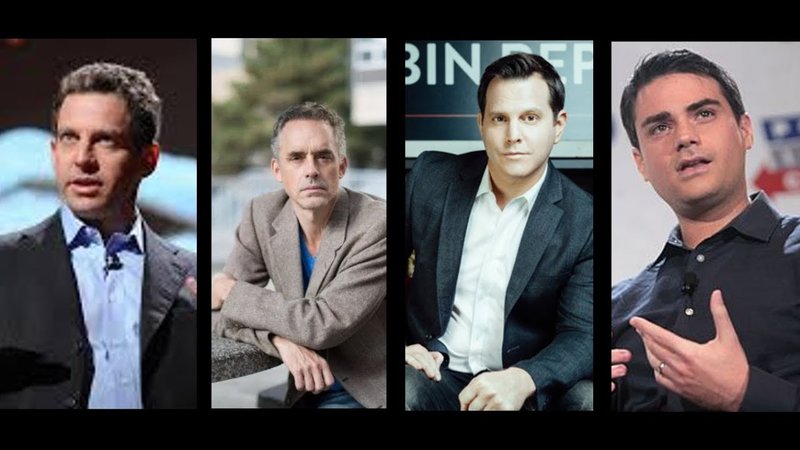
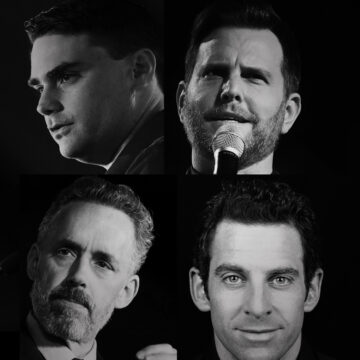
- The thinkers profiled included the neuroscientist and prominent atheist writer Sam Harris, the podcaster Dave Rubin, and University of Toronto psychologist and Chaos Dragon maven Jordan Peterson.
Either the left is making up injustices where they do not exist, the argument goes, or they disregard evidence that social disparities are in fact grounded in scientific reality. In the 1990s, left and progressive thinkers including Richard Rorty, Cornel West, and Edward Said made clear their reservations about certain activist tactics, and articulated positions in line with the same universalist values neoconservatives claimed as their own. Today, magazines like Current Affairs dedicate much of their content to debunking the claims of dark web figures while also addressing the limited effectiveness of “social justice warrior” politics. Treating the beliefs of the dark web as politically conservative views, rather than a sort of transpolitical meta-position — that is to say one critique of political correctness among others, albeit an extreme one — could do much to bring these sorts of left alternatives into the public debate. The intellectual dark web is perhaps a silly name for the group of thinkers it describes, but the search for a novel term does point to the radical transformation of American politics in our current moment.
Contributor: Will The Supreme Court Uphold Trump’s Power Grabs?
The essence of the movement, as I see it, is having the courage to stand up to groupthink, even if it means losing friends or having your positions willfully misconstrued because they don’t fit neatly in a particular ideological box. It’s not about liberals beating up on liberals but, rather, understanding that the same tribalism and regressive thinking that is damaging the Republican Party, perhaps beyond repair, is also wreaking havoc on Democrats and their allies. It’s about smart people asking other smart people to stop acting so stupid.
The rise of podcasting coincided with campus politics spilling over into the wider world. “Cancel culture”, which grew out of this, has often been mentioned on Rogan’s podcast as a problem. The Big Idea is Vox’s home for smart discussion of the most important issues and ideas in politics, science, and culture — typically by outside contributors. These changes explain why Weiss and her arm’s-length comrades in arms feel so embattled. What they all share is not a general commitment to intellectual free exchange but a specific political hostility to “multiculturalism” and all that it entails.
Liu has mostly stuck to his native tongue, despite taking to American social media platforms, suggesting that his Randian goals might be lost in translation. His engagement with Twitter is mostly limited to retweets of ethnic identity activists (the above tweet to the Concordia Association of Manchuria reads, basically, “Basuria congratulates the people of Manchukuo in strengthening their fight to recover their nation”). If we look at things from a historical point of view, Xinjiang, since ancient times, has had a closer relationship with Central Asia and Southwest Asia than East Asia. If we go back to the earliest periods of Chinese history, the Zhou and Han Dynasties, for example — the ethnic composition was different. What is now Gansu and the Hexi-Gansu Corridor used to be populated by people related to Persians. An Lushan and the Nine Tribes of Zhaowu Sogdians in the Tang Dynasty were of Persian descent, too.
Discover Content
For instance, higher social standing and confidence are linked to elevated use of “you” words and reduced use of “me” words. LIWC relies on decades of empirical research and provides specialized means to comprehend, elucidate, and quantify psychological, social, and behavioral phenomena. Finally, although Perspective’s implementation is not open-source, their team has released information on how the current system was trained and deployed, including the pretraining of the model (Lees et al. 2022). That day, critics of the figures profiled in the op-ed posted tweets mocking and deriding the article (shown below).
Postmodernism, ‘woke’ And Disputed Realities
Recent political science research suggests that Trump’s popularity in the 2016 presidential election was based on “status threat.” Members of high-status groups that had lost prestige were more likely to be receptive to Trump’s rhetoric. But writers who suggest that black people are relatively more likely to be stupid are likely to have a much rougher time of it than in the 1990s or the aughts. The same is true for men who call for women who have had abortions to be hanged by the neck until dead. Leon Wieseltier, who ran the New Republic’s book section as an independent barony, sought to exercise a droit du seigneur over female employees, as we learned last year. Slate, famous for its contrarian #slatepitch pieces, published several essays by William Saletan on race and research, which credulously accepted the arguments of J. Philippe Rushton, a race-obsessed researcher linked to the racialist Pioneer Fund and white nationalist New Century Foundation.

The Intellectual Dark Web: A History (and Possible Future)
None of us are immune to what I am about to speculate about other people. The failures of the figures in ashes of the IDW are important because they are relatable. If we want the effort to be about truth-seeking, the truths of our weaknesses and psychological blind spots are probably the most important truths to examine collectively.
Labour’s Islamophobia U-turn Is A Rebuke To The Left
With some notable exceptions, such as Dave Rubin, Jordan Peterson, and Bret Weinstein, the “centrists” of the IDW could never move from the domain of criticism to the domain of action. They acted as if they could solve political problems through interminable podcast debates and failed to offer a viable theory of change. Most simply, it is a collection of iconoclastic thinkers, academic renegades and media personalities who are having a rolling conversation — on podcasts, YouTube and Twitter, and in sold-out auditoriums — that sound unlike anything else happening, at least publicly, in the culture right now. Feeling largely locked out of legacy outlets, they are rapidly building their own mass media channels. Douglas Murray has been fighting with Joe Rogan and comedian Dave Smith over Palestine and Second World War revisionism.
Now, its ideas and figures have helped elect a president, and some of them – Musk, Gabbard and Kennedy Jr – have roles in Trump’s administration. For the intellectual dark web, the worst aspects of campus politics are driven by postmodernism’s degradation of traditional liberal values. Once, the great liberal objective was to try to grasp the truth – the nature of reality. This was done through open and civil discussion, and by drawing on reasoning and evidence. To understand the unhappiness of dark web intellectuals, you have to go back in time. The past few years have seen extraordinary changes in how left-wingers, liberals, and liberal centrists understand themselves.
- Once upon a time there was a good book titled “The Way of the Intellectual Dark Web,” by Jamie Q. Roberts.
- Neoconservatives of the 1980s and 1990s did not always make the same appeals to statistical certainty.
- Any individual who can propose a hypothesis that is falsifiable is welcome to partake in this game of science.
- They acted as if they could solve political problems through interminable podcast debates and failed to offer a viable theory of change.
- Unlike Roger Kimball, Peterson does not make much of an effort to link these academic trends to the radical politics of the 1960s.
- Recognizing that these dark web ideas are conservative might also help clear up space for people on the left of center who might share some criticisms of political correctness or campus activism without indulging the right-wing implications of these ideas.
Published
The world of truth is too dangerous for these vulnerable persons, so we must bubble wrap knowledge as to not harm their sensibilities, so the logic goes. Well, in bubble wrapping the world, we disguise its reality, and that is a surefire way to cause catastrophe. We can’t put blinders on certain corners of the world and expect to come out with a proper understanding of how it functions. What these individuals have in common is that, in the pursuit of truth and free expression, they offended arbiters of politically correct opinion. These thinkers are the new heretics who challenge the religious convictions of society and they are excommunicated in the same way that those who went against the church once were.
After Bush failed against Democrat Bill Clinton (who had led a libertarian insurgence in the Democratic party) Republicans rebranded once again, this time with the “Contract with America,” which bundled together poll-tested ideas to regain political ground in 1994. Once in office, however, the document’s architect, Speaker of the House Newt Gingrich, unveiled his true radicalism through gigantic budget cuts and government shutdowns which enabled Clinton to easily win reelection in 1996, even though Republicans held onto Congress. Whether or not Liu makes any progress in bringing the American barbarians around, his ideas and jargon remain present and potent on the Chinese-language internet.