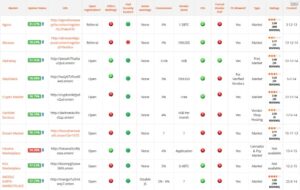
Authorities seized assets valued at 7.8 million euros, including cryptocurrency and luxury goods, and deployed around 300 officers across multiple countries during the operation. On the basis of therapy area, the market is classified into oncology, hematology, neurology, endocrinology, cardiovascular, respiratory, immunotherapy, infectious diseases, and others. Key players operating in the market are Pfizer, Johnson & Johnson Services Inc., Bayer AG, Takeda Pharmaceutical Company Ltd., Reckitt Benckiser Group PLC, Sanofi S.A., Novartis AG, GlaxoSmithKline PLC, Boehringer Ingelheim International GmbH, and Mylan. The market participants are constantly working towards new product development, M&A activities, and other strategic alliances to gain new market avenues.
Orphan Drugs Market Snapshot & Highlights
NIDA conducts research on specific emerging drugs through its Designer Drug Research Unit and through support for the National Drug Early Warning System (NDEWS), which detects early signals of potential drug epidemics. NDEWS uses traditional surveillance methods like drug-related emergency calls, and newer tools like wastewater analysis and tracking of social media trends. The Parker administration is moving to invest $100 million in 600 new addiction-treatment beds. That’s a good start, but it’s unclear what the total number of beds needed is, and for what period of time.
For example, the American Cancer Society estimates new cancer cases and deaths in the United States in 2022, with an estimated 1.9 million new cancer cases diagnosed and 609,360 cancer deaths. In the United States, generic drug approvals are increasing due to the implementation of the FDA’s Drug Competition Action Plan, which aims to remove the barriers faced by generic drug manufacturers. Food and Drug Administration (USFDA) reapproved the Generic License Fee Amendment in 2017, providing the FDA with additional resources for the review of generic drugs. Europe retains a robust footprint built on reference pricing, tendering, and high biosimilar acceptance. Market share in Germany and the Nordics reaches near-saturation, yet growth stems from therapy class switches as high-cost biologics lose exclusivity. The European Commission’s strategy to relocate essential medicine production within the bloc could redefine supply chains, deliver cost-plus contracts to reliable producers, and lessen exposure to single-country disruptions.
- Over $217 billion in original patents are set to expire shortly, and they cover everything from biologics to oral solids, injectable, and inhalers to over-the-counter (OTC) drugs.
- Considering all the factors, the adverse effects of antipsychotic drugs are a prominent restraining factor for the market growth.
- The resulting high-volume production allows drug market control with lower prices and production costs.
- India and China are the major driving forces within this growth, with digital pharmacy models alongside increased access to healthcare in urban and rural communities expanding the uptake of generics.
In An Emergency? Need Treatment?
Drug prices in the United States are nearly three times higher than 33 comparison countries such as the United Kingdom, France, Germany and Canada, according to a 2024 report from the Department of Health and Human Services. The White House also said it plans to unveil a new website, dubbed TrumpRx, to allow direct-to-consumers sales of drugs. The report is excellent and has good amount of data and our team is extremely happy with the information provided. The most important key figures provide you with a compact summary of the topic of “Pharmaceutical industry in the U.S.” and take you straight to the corresponding statistics. Archetyp Market was one of the few marketplaces allowing the sale of highly potent synthetic opioids such as fentanyl, contributing to broader health threats and overdose risks in Europe and beyond.
Retail Pharmacies Account For Major Market Share
That Parker has offended the right people is not, in itself, evidence that her strategy is working. People are still strewn across sidewalks, smoking or shooting fentanyl, or hunched in the half-awake stoop of the opiate high. And regulars say that while the main thoroughfare, Kensington Avenue, has been cleared out, most of the activity has just shifted location.
Growth is fueled by rising demand for biologics, oncology drugs, and rare disease therapies. Increasing FDA approvals and the expanding pipeline of specialty treatments further accelerate market growth. Hospital pharmacies remain the dominant distribution channel, with retail pharmacies enhancing access to chronic disease treatments. North America pharmaceutical market holds a leading position in 2024, accounting for 41.87% of the global share. The region’s dominance is driven by high healthcare expenditure, strong regulatory frameworks, and advancements in biologics and personalized medicine.
By Therapy Area Analysis
Many countries in this region are investing heavily in building manufacturing capabilities and research infrastructure, supported by favorable trade policies aimed at attracting foreign investment and boosting local production. The emerging middle-class population with rising chronic disease prevalence amplifies the demand for pharmaceutical products. Additionally, strong government patronage in countries like China, India, and South Korea has resulted in accelerated approvals of innovative drugs and biosimilars alongside efforts to reform patent laws and reduce barriers to generic drugs. Europe pharmaceutical market is witnessing steady growth, led by Germany, France, and the UK.
Future Outlook And Challenges In Prescription Drugs
All actual figures have been sourced and analyzed from publicly available information forums and primary research discussions. Unlock industry potential through cutting-edge research, data-driven insights, and strategic guidance. Regulators issued 304 warning letters for data integrity and quality-system lapses in 2020; the heightened vigilance persists as FDA inspectors flag recurring deficiencies fda.gov.
The Role Of Increase In Product Approvals
The global pharmaceuticals market size was estimated at USD 1,645.75 billion in 2024 and is expected to reach USD 1,746.47 billion in 2025. Towards Healthcare is a leading global provider of technological solutions, clinical research services, and advanced analytics, with a strong emphasis on life science research. Dedicated to advancing innovation in the life sciences sector, we build strategic partnerships that generate actionable insights and transformative breakthroughs. As a global strategy consulting firm, we empower life science leaders to gain a competitive edge, drive research excellence, and accelerate sustainable growth.
What Is The Current Size Of The Global Generic Drugs Market?
Efforts focus on enhancing efficacy, reducing side effects, and developing long-acting formulations to improve patient adherence and clinical outcomes. Around the world, the number of pharmaceutical companies is moving towards advancing treatments customized to each patient, depending on their genetic characteristics and disease patterns. Also, incorporating biologics, like monoclonal antibodies and cell therapies, is predicted to play a consistently significant role in treating complex conditions like cancer and autoimmune disorders. Although emerging technologies in drug delivery, comprising oral formulations of earlier parenteral drugs like GLP-1s, are optimizing patient access and adherence. The retail pharmacies segment captured a significant portion of the market in 2024 because they are the most common places where people can buy generic drugs easily and at low cost. Retail pharmacies and online pharmacies gave patients access to super generics and education about their potential benefits.
Moreover, healthcare providers often prioritize using generic drugs for chronic disease management due to their proven safety and efficacy. They may prescribe generics as a first-line treatment option or encourage patients to switch from brand-name medications to their generic equivalents to improve adherence and reduce costs. In addition, the payers, including insurance companies and government programs, recognize the cost-saving potential of generic drugs in chronic disease management.
Regional Analysis: North America Emerges As The Hub For Anti-Obesity Drugs Market
The generic drugs market is segmented by molecule complexity, route of administration, therapeutic area, distribution channel, and geography. By molecule complexity, the market is segmented into simple generics, specialty generics, and biosimilars. By route of administration, the market is segmented into oral, topical & dermatological, injectables, and other routes of administration. The other route of administration includes inhalable, ophthalmic, transdermal, sublingual/buccal, and rectal/vaginal.
The pharmaceutical market in Germany is a key country in Europe’s pharmaceutical market, supported by advanced manufacturing capabilities and significant investments in biopharma research. The market is driven by demand for therapies targeting metabolic disorders, oncology, and cardiovascular diseases. Hospital pharmacies hold a substantial share of the distribution segment, with increasing penetration of retail pharmacies improving patient access to medications. During the prospective period, the Asia Pacific is estimated to register the fastest growth in the market. China and India are experiencing a rise in the geriatric population, who are linked with severe and chronic issues, such as cancers, diabetes, and rare genetic disorders. Besides this, emerging countries are widely adopting cost-effective generic drugs, as well as government support and policies are encouraging the overall market developments.
Brick-and-mortar chains are responding by integrating same-day delivery and store pickup options to preserve foot traffic. As these models coexist, logistics efficiency and user-centric digital tooling will influence share shifts across the generic drugs market. The high cost of branded oncology drugs can pose significant financial burdens on healthcare systems, insurers, and patients. Generic oncology drugs offer a more cost-effective alternative, helping to reduce overall healthcare expenditures and improve affordability and access to cancer treatments. As a result, payers and healthcare providers often encourage the use of generic drugs to lower healthcare costs while maintaining treatment quality. This has led to a small number of patients adopting these drugs, and a significant proportion of these patients face financial hurdles during the usage of these products.