
Darknet cartels are often rated from 1-star to 5-star based on drug potency and customer service. Its origins can be traced back to the 1990s, through research funded by the United States Department of Defense. The aim was to develop an encrypted communication network for intelligence operatives. This initiative evolved into the Tor network, now used globally—for both legitimate and illegal activities. The dark web, unlike the surface web and deep web, is a concealed part of the internet requiring specific tools such as Tor (The Onion Router) to access. While the surface web includes everyday websites and the deep web comprises password-protected platforms like banking portals, the dark web is intentionally kept anonymous.
NCB Busts Narcotics Network That Dealt On DarkNet, Used Cryptocurrency
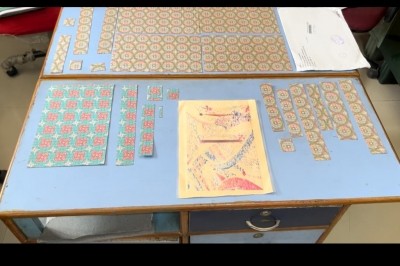
Others are looking for stolen data, hacking services, or even banned books and political content. LSD is odourless, colourless and tasteless and can be painted onto small squares of paper that people lick or swallow and it alters the sense of space, distance and time. The bust has not only revealed the vast scale of online narcotics trading in India but also raised urgent concerns about the security challenges posed by the hidden corners of the internet. The NCB’s bust follows a four-month investigation during which authorities tracked Edison’s operations, which allegedly included over 600 drug consignments to cities like Bengaluru, Chennai, Delhi, and Himachal Pradesh. The NCB’s investigation began after intercepting 280 LSD blots from three postal parcels in Cochin on June 28, 2025. Taking the lead forward, it was investigated that the parcels were booked by a suspect, leading to a search of his residence on June 29.
Industry-Specific Cyber Threat Intelligence Powered By Agentic AI
New software tools have been developed under cyber experts’ guidance to track and apprehend individuals involved in these transactions. In response to a rise in dark web dealings, particularly drug-related, Kerala Police has intensified cyber patrolling. A dedicated wing within the state’s Cyber Dome has been deployed exclusively to monitor dark web transactions. “For effective investigation, three NCB officers were awarded the Union Home Minister’s Medal for Investigation,” the sources said. The second category consists of data stores, which specialize in stolen information.
- The Vienna-headquartered International Narcotcis Control Board (INCB) has published its annual report for 2021 putting spotlight on the South Asian and the Indian drugs scenario under the topic ‘analysing of the world situation’.
- In a statement, the NCB said the drug cartels on the darknet are rated on a scale of 1-5 stars based on the potency of the drug sold through their platform and their ‘customer service’.
- According to NCB investigations, Babu had quietly established a digital-first narcotics business.
- These sites cater to cybercriminals seeking valuable data, such as credit card numbers, login credentials, and personal information.
- Working largely alone, he ascended to the highest vendor level on the darknet—“Level-4,” the gold standard for reliability and volume among darknet marketplaces.
- NCB officials confirmed that ‘Ketamelon’ was India’s only Level 4 darknet vendor — a top-tier status in India — operating actively over the past two years.
History Of Dark Web Marketplaces
We also provide business and technology news to those who evaluate, invest, and manage the IT infrastructure of organizations. CXOtoday has a well-networked and strong community that encourages discussions on what’s happening in the world of IT and its impact on businesses. This seizure exemplifies NCB’s commitment to successfully dismantle the supply of synthetic drugs facilitated via the Darknet and cryptocurrency channels to accomplish the vision of DRUG FREE INDIA. Zambada cartel was the only cartel in the country with 5-star rating of most time in India operating from Delhi NCR. Dr Seuss AKA DS and TS (Tribe Seuss) were coordinating with the kingpin of Zambada cartel with plans to open outlets in India.
The NCB Delhi zonal office conducted multiple raids at the premises of these three persons leading to the seizure of 13,863 LSD blots, 428 grams MDMA (ecstasy), and the freezing of Rs 26.73 lakh “drug money”, agency officials said. “In continued operations, it was learnt that the largest cartel operating in LSD on the darknet – Zambada- operates from Delhi-NCR,” Singh said. “Two of the ground operators of this cartel were identified through technical and human surveillance and this led to the location of the ‘mastermind’ of this cartel who was operating from Ballabgarh (Faridabad) in Haryana,” he said.
FAQ – Dark Web Markets 2025 And Cybersecurity
According to a senior NCB officer, the agency, after weeks of intelligence gathering, intercepted three postal parcels in Cochin on June 28, containing 280 LSD blots. Acting swiftly, they raided the suspect’s residence on June 29, uncovering a further 847 LSD blots, Ketamine and a trove of digital evidence. NCB sources said that the ‘darknet,’ operating under the veil of the digital world, had provided a new haven for drug traffickers.
The cartel operated from Delhi NCR and had a consistent 5-star rating on the darknet. In a high-stakes operation codenamed “MELON”, the Narcotics Control Bureau (NCB) recently dismantled India’s most prolific darknet drug syndicate, “Ketamelon”. “This was (Ketamelon) one of India’s most prolific darknet drugs syndicates. The agency launched an operation codenamed ‘Melon’ to investigate it after getting primary inputs from the Cochin seizure,” the NCB said in a statement.
The agency’s efforts to disrupt the supply chain of synthetic drugs and cryptocurrency transactions will continue to be a priority in the pursuit of a ‘Drug-Free India’ as envisioned by the central government. It is the second LSD trafficking cartel busted by the agency in the last about three months, officials said. NCB Deputy Director-General Gyaneshwar Singh on Tuesday said the cartel had planned to set up its first LSD outlet in India with a minimum stock of 1 lakh LSD blots, with international to-and-fro facilities.
India’s NCB & Binance Join Forces To Take Down The Country’s Biggest Darknet Drug Network
Drugs were primarily sourced from a UK-based vendor, Gunga Din, a known re-shipper of the globally infamous Dr Seuss (aka DS or Tribe Seuss), believed to be the largest LSD source in the world. It exposes the vulnerabilities in existing postal monitoring, the challenge of policing privacy-focused cryptocurrencies, and the increasing technical sophistication of domestic drug traffickers. Unlike previous drug busts that focused on street-level dealers or bulk smugglers, this operation had to contend with an adversary leveraging encryption, digital anonymity, and decentralized finance. On the surface, Edison Babu seemed like any other well-educated professional from Kerala—a mechanical engineer, a family man, and a mild-mannered resident of Muvattupuzha, Ernakulam district. To his neighbors and acquaintances, he was soft-spoken and reserved, occasionally spotted taking his toddler to daycare.
Working largely alone, he ascended to the highest vendor level on the darknet—“Level-4,” the gold standard for reliability and volume among darknet marketplaces. Over roughly 14 months, he processed and shipped over 600 drug consignments to customers across India, earning a reputation for reliability and discretion. High-potency LSD (lysergic acid diethylamide) blotters and ketamine, both sought-after substances in India’s underground party and rave circuits. The Narcotics Control Bureau (NCB) has busted a top darknet-based drug vendor named ‘Ketamelon’, which had been operating for the past two years.
The Narcotics Control Bureau (NCB) has busted the country’s largest darknet-based Lysergic Acid Diethylamide (LSD) smuggling syndicate named “Zambada cartel” with the arrest of three accused persons. “This is the second-largest LSD seizure in India, after the 2023 bust of another five-star-rated darknet cartel. The Muvattupuzha native is suspected to be the kingpin of this sophisticated trafficking network.
Agentic AI–Driven Threat Intelligence Tailored For Every Function
These cartels collect money in various crypto wallets and then transfer it across through various layers of virtual currencies and finally receive the money in their bank accounts, an NCB officer said. The ‘Zambada’ cartel, according to the agency, was the “only” cartel in the country with a so-called ‘5-star rating’. A swift follow-up search at his residence the next day unearthed 847 more LSD blots and over 130 grams of Ketamine — together valued at Rs 35.12 lakh.
NCB Makes India’s ‘Largest-Ever’ LSD Seizure, Recovers 15,000 Blots Worth Rs 10 Crore
The bust highlights the growing sophistication of tech-enabled drug networks and the need for advanced cyber surveillance and inter-agency coordination. Evidence uncovered during the operation included a hardware wallet holding about $800 worth of USDT and custodial wallets on platforms such as Binance. The NCB cited Binance’s assistance in tracing and analyzing cryptocurrency activity, which played a crucial role in identifying and freezing illicit funds. This process, he noted, leaves a digital trail that can be followed with the right tools and cooperation 1.
The operation unmasked Edison Babu, a former engineer from Kerala, as the mastermind behind a sprawling online drug empire disguised as an e-commerce business. The NCB’s success in tracking down Ketamelon underscores the expanding capabilities of authorities in monitoring and disrupting cryptocurrency-facilitated illicit trade. Over the past 14 months, more than 600 drug consignments were delivered to major cities including Bengaluru, Chennai, Bhopal, Patna, Delhi, and parts of Himachal Pradesh and Uttarakhand.
According to NCB investigations, Babu had quietly established a digital-first narcotics business. Under the identity “Ketamelon,” he received orders on numerous darknet markets, communicated encryptedly, and shipped drugs via India’s postal and courier networks. The cartels on darknet are rated on scale of 1 star to 5 star based on their potency of drug sold and their customer service. Under the identity “Ketamelon,” he received orders on numerous darknet markets, communicated in encryption, and shipped drugs via India’s postal and courier networks. Silk Road was one of the earliest and most prominent dark web drug markets before its 2013 shutdown. Similar platforms like Silk Road 2, Evolution, and Agora later emerged to continue this illegal trade.
What made Ketamelon’s enterprise particularly difficult to trace was the hybrid approach Babu adopted. While the initial orders, payments, and communications were meticulously anonymized using state-of-the-art technology, the delivery mechanism was almost quaint—he relied on India’s government postal system to ship drugs in carefully disguised packages. Custodial wallets on cryptocurrency platforms such as Binance have also been traced for further action. Investigators discovered that the racket was run by Muvattupuzha native Edison. The group used Monero (XMR), a privacy-focused cryptocurrency popular in illegal transactions. In Ludhiana, the NCB has also busted a “basket” case having international drug racket links in Dubai, Afghanistan and Pakistan.
The NCB then zeroed in on the “Zambada” cartel whose conduits were operating from Delhi and nearby areas. The agency then tracked down their handler from Ballabgarh in Haryana’s Faridabad. During the subsequent raids, 13,863 LSD blots, 428 gm of MDMA and ₹26.73 lakh were seized. The NCB’s ability to adapt with coordinated postal surveillance, digital forensics, and crypto-tracing signals progress, but also highlights persistent vulnerabilities. Sustained vigilance, enhanced cybercriminal expertise, and expanded inter-agency cooperation are essential to prevent recurrence and achieve a drug‑resilient India.