Both in town and online, privacy is sought not only by upstanding citizens, but also by those looking to hide their not entirely legal activities. In the physical world, we think of shady business as taking place in slums and criminal dens — places selected for their lack of foot traffic and that are not marked on public maps. The addresses and whereabouts of each den are known to a limited circle of individuals, although many are aware that they exist somewhere. The safety of accessing the deep web or dark web depends on your intent, knowledge, and the precautions you take.
This can be your email, banking information, or your social media account. Most of this limited collection is in the form of Google sites and services. In reality, the internet is enormous, and it has around one billion websites existing on servers around the globe. Whistleblowers, journalists, and activists rely on the dark web to bypass censorship and communicate securely. Even reputable organizations like the BBC have mirror sites on the dark web to ensure that people living in oppressive regimes can access unbiased news. The dark web also has specialist websites available for whistleblowers who want to expose corruption or illegal business practices.
- Of course, if someone is actually looking to buy access to such things, they don’t earn a lot of sympathy as victims of the scam.
- Therefore, this content is inaccessible to most online users, and it is difficult to track the visitors of such websites.
- Just below the surface web is the deep web, which includes private databases, web pages not indexed by search engines, password protected accounts, and more.
- Besides this, Freenet is also a darknet that is used for file transfer anonymously, there are many other darknets available.
- They require access to a specific VPN service and credentials before they can be viewed.
So in theory, no one, not even the site you’re accessing, can see your IP address, track your browsing history, or trace anything you do on the dark web back to you. The shadow web is the next layer beneath the dark web and is said to be worse. A lot of its information is speculative and conflicting since there is tremendous secrecy surrounding it. The information available on message boards and forums suggests a paywall where users can see truly hardcore and shocking content. The shadow web is also believed to be the place where significant criminal networks and activities exist.
Examples Of Illegal Activities And Risks Associated With The Dark Web
To access the Dark Web safely, use the official Tor browser and consider utilizing a VPN to enhance your privacy by encrypting your internet traffic, preventing tracking by ISPs or government entities. While it is not always possible to discover directly a specific web server’s content so that it may be indexed, a site potentially can be accessed indirectly (due to computer vulnerabilities). Use Tor browser on a separate device, enable VPN for added anonymity, disable scripts, avoid downloading files, never reveal personal information, and follow organisational security policies. However, it poses challenges for collaboration; sharing Deep Web resources across organisations requires secure, standardised protocols. While Tor protects you and gives you anonymity on the dark web, we recommend that you don’t use the dark web. If you still wish to access it, don’t use your regular email and ensure your Tor applications are updated.
Key Differences: Deep Web Vs Dark Web Monitoring
The Surface Web underpins many modern conveniences, from online shopping to connecting with friends, and it serves as the primary gateway to information for billions of people worldwide. Check Point offers cyber security risk assessments, which help organizations to identify their cyber risks and develop plans for remediating them. Have you ever wondered how come a result pops up on your screen when you type something on a search bar? All sites on the dark web end with “.onion,” as opposed to “.com” or “.org” commonly seen on the surface web. That’s a deliberate ploy so that only browsers with specific proxies are allowed to access those sites. It’s also very difficult to remember the URLs of sites on the dark web, which is another way to maintain their anonymity.
Risks And Challenges

You can’t access the deep web or dark web using standard search engines like Google, because neither is indexed. To access content on the deep web, you simply need the correct links and credentials, while the dark web requires specialized tools, like Tor. On the other hand, the dark web relies on anonymity and encryption to function.
Internet And Search Engines
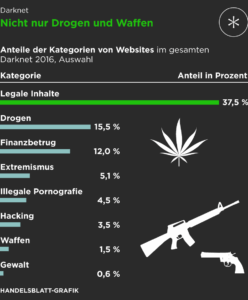
People buy and sell illicit goods and services, share illegal files, sell criminal services, and carry out cybercrime, hate crimes, stalking, and more. At the top, there is the “visible or surface web.” The visible web is what you’re looking at right now. Because Google bots and other web crawlers index them, you can find these pages with a quick online search. The Dark Web is a section of the Deep Web that is inaccessible via traditional web browsers. To access Dark Web sites, it is necessary to use a Tor-enabled browser.
- Understanding the differences between the deep web vs dark web is crucial for the safe and responsible use of the internet.
- But did you know that only 10% of websites on the Internet are indexed by Google, Yahoo, Bing, and other search engines and accessible to the general public?
- You may have heard of the terms shadow web, dark web and deep web is used when referencing the internet but aren’t quite sure what they mean.
- Since sites on the dark web are unregulated and unmonitored, there’s no guarantee that sites are free of malware, ransomware, or other malicious code.
- Law enforcement officials in some countries have been found to run or seize exit nodes to monitor dark web traffic.
Blog Search
Think about how many people will see the Gmail login screen on the clear net and how many individual Gmail accounts there are on the deep web. Now apply that logic to everything else, and you can start to grasp the difference in scale. By nature, the deep web is the part of the internet that offers more data than the surface web.
Understanding The Internet: Surface, Deep, And Dark

It is a vast realm that encompasses legitimate private networks, academic databases, and many other sources of information. On the other hand, the dark web is deliberately concealed and can only be accessed through specialized software. Its content, unfortunately, is primarily geared towards illegal actions, making it a breeding ground for cybercrime. Since resources can be accessed with standard browsers, security teams, researchers, and law enforcement agencies can effectively explore the deep web as required.

Imagine the deep web as a hidden treasure trove of knowledge and resources, accessible only to those with the right keys. It is like a secret library, where researchers, scholars, and individuals seeking privacy can find valuable information. In contrast, the dark web is more like a shadowy underworld, where nefarious activities thrive behind a curtain of anonymity. Imagine yourself diving into the vast ocean of information, where the surface web is like sparkling waves gently crashing against the shore. It’s part of the internet that most people are familiar with, where you can effortlessly navigate through websites, explore a myriad of topics, and connect with others.
The Internet is an enormous and complicated information network; the overwhelming majority of that is simply not available to any average user. The part that we are most familiar with is really just what we might think of as the surface web. This includes sites we regularly visit, be it our social media networks, news outlets, or e-commerce sites – indexed by traditional search engines like Google or Bing. This very well-known territory hides a lot more – a giant called the deep web and an even smaller part called the dark web.
The surface web, also known as the indexed web, is the part of the web that is easily accessible and searchable through traditional search engines like Google and Bing. This includes websites, blogs, news articles, and other publicly available information. An example that you have likely heard of is the Tor Network (The Onion Router). Others, like the Invisible Internet Project (I2P), exist, but Tor is the most famous darknet in the world.