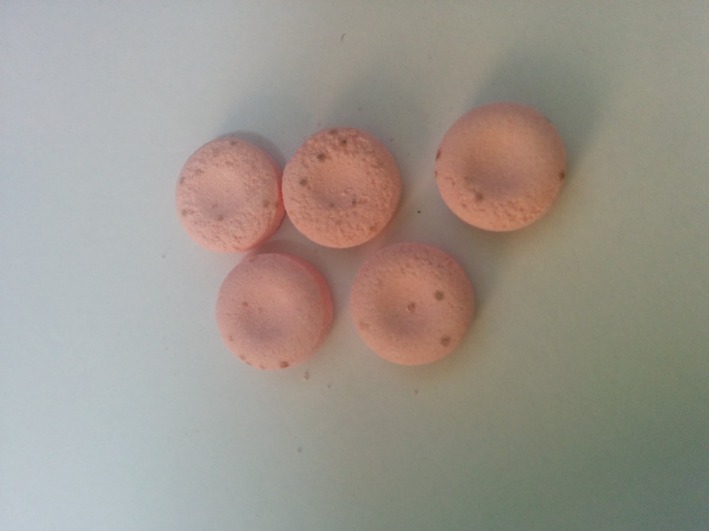
The use of piperazine derivatives, colloquially named ‘party pills’, has been escalating in New Zealand and worldwide since their introduction in the 1990s. Benzylpiperazine (BZP) is often used alone, or can be combined with trifluoromethylphenylpiperazine (TFMPP). Taken together as an oral dose, they have been reported to produce effects similar to 3, 4-methylenedioxymethamphetamine (MDMA).
Following a risk assessment by Europol and the EMCDDA in 2007, a Council Decision of 2008 introduced controls on BZP in the European Union. Objectives ‘Party pills’ have found use worldwide as a substitute for amphetaminederived designer drugs. Whilst some information exists about the metabolism of these drugs, there is little information about their ability to inhibit the metabolism of coadministered drugs. This study aimed to determine whether predictions can be made about global interactions between ‘party pills’ constituents and other drugs metabolised by the same cytochrome P450 (CYP) isoenzymes. Methods The inhibitory effects of seven benzyl and phenyl piperazines were measured in microsomal incubation assays of probe substrates for five major CYP isoenzymes. In addition, the metabolism of benzylpiperazine and trifluoromethylphenylpiperazine, the two most commonly used constituents of ‘party pills’, was investigated using human liver microsomes assays and known inhibitors of CYP isoenzymes.
Chemical Derivatives
Piperazines sold in bulk over the Internet made their way to the club and rave scene. They grew in popularity among adolescents and young adults, sometimes being sold as the dangerous and often-abused drug ecstasy but usually as “BZP,” “legal E,” “legal X,” or “A2.” The dangers of BZP and TFMPP stem from their stimulant effects. Rapid heart rhythms, tremors, and convulsions have been reported in some cases. Benzylpiperazine (BZP) and trifluoromethyl-phenylpiperazine (TFMPP) are both stimulants—substances that increase the activity of a living organism or one of its parts.

(ii) There is broad cross-national agreement on what should be scheduled. (iv) Temporary bans that delay final decisions by months can sometimes allow final decisions to be grounded on a substantially expanded research base. Conclusions The process for determining the legal status of new psychoactive substances appears to function reasonably well, within the framework of international treaty obligations.
Illegal piperazine tablets are sometimes packaged in vitamin containers. The pills may be white, off-white, tan, or bright shades of green, orange, pink, purple, or yellow. Like ecstasy tablets, piper azine tablets resemble sweet-and-sour candies. They often feature tiny logos—a heart, a fly, a butterfly, a crown, a smiley face, a bull’s head, or a squirrel, for example—etched in them. Some users have reported snorting or smoking BZP preparations.
There are no readily-available screening tests for mCPP or the other phenylpiperazine derivatives. In the mass spectrum, the principal ions (m/z) of mCPP are 154 (base peak), 196, 156, 56 and 138. However, mass spectrometry does not distinguish mCPP from its isomers (oCPP and pCPP). Consumption of BZP and other piperazine derivatives is mainly by ingestion. On rare occasions BZP has been injected or snorted (insufflated).

Toxic Effects
(2001), ‘The subjective effects of MDMA and mCPP in moderate MDMA users’, Drug and Alcohol Dependence, Volume 65, No 1, pp. 97–101. (2008), ‘Analyses of illegal drugs in Belgium, 2008’, Report by the Scientific Institute of Public Health, Brussels. (1973), ‘Comparison of the effects of dexamphetamine and 1-benzylpiperazine in former addicts’, European Journal of Clinical Pharmacology, Volume 6, pp. 170–176. Neither BZP nor any other substituted piperazine is listed in the Schedules of the United Nations 1971 Convention on Psychotropic Substances.
How Do People Take It?
One piperazine that has been commonly used as NPS is 1-benzylpiperazine (BZP) though other piperazine derivatives have also been reported. These include among others 1-(3-chlorophenyl) piperazine (mCPP), 1-(3-trifluoromethylphenyl) piperazines (TFMPP), 1-benzyl-4-methylpiperazine (MBZP), 1-(4-fluorophenyl) piperazines (pFPP) and 1-cyclohexyl-4-(1,2-diphenylethyl) piperazine (MT-45). In countries such as New Zealand where BZP and related piperazines have been made illegal, there is now increasing commercial interest in piperazine-free “party pills” which are purported to produce similar effects with ingredients that will circumvent the ban. Stimulants mediate the actions of dopamine, norepinephrine and/or serotonin, mimicking the effects of traditional drugs such as cocaine, amphetamine, methamphetamine, and ecstasy. Opioids belong to a chemically diverse group of central nervous system depressants. They bear structural features that allow binding to specific opioid receptors, resulting in morphine-like effects e.g. analgesia.
Derivatives
- Warnings are given against combining prescription piperazines, used to treat parasitic infections, with certain psychiatric medications.
- The combination of BZP and TFMPP induced similar subjective effects, along with well-characterized dexamphetamine- and MDMA-like effects.
- Three-ring substituted methylbenzylpiperazines (MBPs) and their isobaric benzoylpiperazine (BNZP) have equal mass and many common mass spectral fragment ions.
- The tablets often carry logos similar to those seen on ‘ecstasy’ tablets.
- If you or someone else needs urgent help after taking drugs or drinking, call 999 for an ambulance.
- Several countries have introduced national control measures over piperazines.
Whilst it has been linked to a number of fatalities in association with BZP, there are no documented cases of it being toxic in its own right 1.
Like ecstasy, piperazine has spread from the club scene to high schools and college campuses. Use of BZP was first reported in the United States and Switzerland in 2000. Drug Enforcement Administration (DEA), seizure of BZP and TFMPP tablets, capsules, and powders increased steadily through 2004. In 1999, drug researchers in Japan found that a particular form of benzylpiperazine stimulates a brain chemical called acetylcholine.
Typical Users

Results The sample included 58 young people aged 17–23 years who had used BZP-party pills in the previous 12 months. Young people were using these substances in a range of settings – primarily during weekend social occasions – particularly as part of the dance party culture. They were mostly used for their stimulant properties and to enhance socialisation, and were often taken in combination with other legal and illicit drugs. Young people had suffered a range of physical and emotional negative effects, although none of these was reported as being life-threatening or long-term. Many participants had reduced the frequency with which they used BZP-party pills due to adverse effects. Potentially risky behaviours identified included taking large doses, mixing BZP-party pills with alcohol and other substances, and driving whilst under the influence of BZP-party pills.
NEARBY TERMS
While the pharmacokinetic data have recently been published, little research has been conducted on the subjective effects of these piperazines on humans. This paper outlines the subjective effects observed following oral doses of BZP (200 mg) and TFMPP (60 mg) alone, or in combination (100/30 mg) compared to placebo. BZP showed significant dexamphetamine-like stimulant effects, inducing euphoria, sociability, and drug liking, whereas TFMPP induced fewer stimulant-like effects and increased anxiety, via its serotonergic effects. The combination of BZP and TFMPP induced similar subjective effects, along with well-characterized dexamphetamine- and MDMA-like effects.
In Vivo Interactions Between BZP And TFMPP (party Pill Drugs)
These subjective data allow for obvious comparisons to be made between party pill drugs and other commonly known stimulants. However, despite estimates of over 20 million doses sold in New Zealand alone and increasing seizures by the Drug Enforcement Administration in the USA, there are no published cases of dependence worldwide. The long-term effects of regular party pill use are also unknown, and create the potential for future research. The combination of BZP and TFMPP induced similar subjective effects, along with well-characterized dexamphetamineand MDMA-like effects. Background This study aimed to investigate patterns and context of use of BZP-party pills, function of use, and positive and negative effects experienced by a sample of New Zealand young people who had used the products. Methods A qualitative study comprised of semi-structured interviews and group discussions.
In humans, piperazine citrate serves a similar function and is used to treat pinworm and roundworm infestations in adults and children. The drug acts by paralyzing the muscles of mature worms and dislodging them from the walls of the intestines. TFMPP is controlled in Texas under Penalty Group 2, as a hallucinogenic substance.
Benzylpiperazine/Trifluoromethyl-phenylpiperazine
The DEA reports that BZP and TFMPP are sometimes deliberately mixed with ecstasy by drug dealers and then sold as ecstasy. Some users hoping for an extended or intensified high from ecstasy will knowingly combine these drugs. A DEA “Drug Intelligence Brief” described the drug-related death of a 23-year-old woman in Zurich, Switzerland, after she had consumed both BZP and ecstasy. Medical evidence suggests that the drug combination made her extremely thirsty. Before going into a coma, she consumed 10 liters of water in just 15 hours.
(2003), ‘Central Serotonergic Effects of m-Chlorophenylpiperazine (mCPP) among Normal Control Adolescents’, Neuropsychopharmacology, Volume 28, pp. 133–139. (2008), ‘Investigation of the first deaths in the United Kingdom involving the detection and quantitation of the piperazines BZP and 3-TFMPP, Journal of Analytical Toxicology, Volume 32, No 2, pp. 172–177. (1999), ‘The forensic examination of benzylpiperazine and phenylpiperazine homologs’, Presented at the 9th Annual Clandestine Laboratory Investigating Chemists Association (CLIC) Technical Training Seminar, Toronto, Ontario, Canada, 8–11 September, 1999. This repository is under review for potential modification in compliance with Administration directives. People who use BZP or TFMPP usually lose interest in food and may stop eating altogether. After about two weeks on the drug, however, the effects on food intake and weight loss level off.

BZP is sometimes erroneously described as a ‘worming agent’. Although piperazine itself is used as an anthelminthic drug, neither BZP nor any other piperazine derivative is licensed for this purpose. As an agonist at the 5HT2C receptor, and an antagonist at the 5HT2B receptor, mCPP has been widely used as a probe of serotonin function in psychiatric research.
Most participants (91.7%) had engaged in polydrug usage and 1,670 combinations of drugs were reported. Ecstasy (86.6% of users) and cocaine (85.7% of users) were the two most-frequently reported club drugs used in combination with other substances. In terms of poly-club drug combinations, ecstasy appeared to be the “universal compliment” as this drug was most often cited in combinations with other club drugs (specifically ecstasy + ketamine, ecstasy + cocaine, ecstasy + gamma hydroxybutyrate or GHB). Other frequently cited 849 drug combinations included cocaine and marijuana, ecstasy and marijuana, LSD and marijuana, and cocaine and alcohol.